
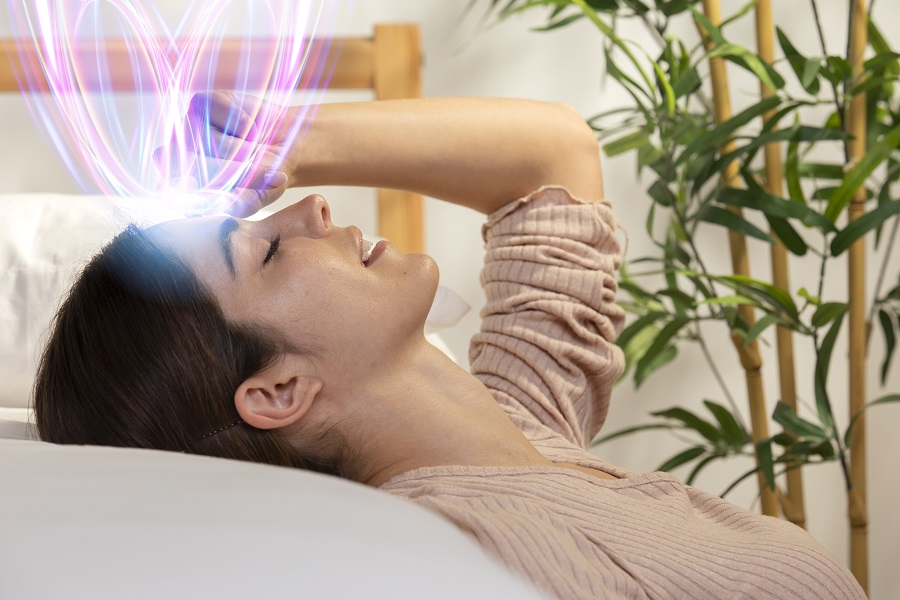
If you’re searching for a way to access deeper relaxation, improve your mood, and support emotional healing, theta therapy might just offer the change you need. By working within the unique 4-8 Hz brainwave range, this approach taps into your subconscious, helping with everything from stress reduction to memory and creativity. The specific benefits can make a real difference in long-term well-being—so let’s look at how these effects could shape your life next.
Theta therapy involves the activation of theta brainwaves, which function in the frequency range of 4-8 Hz.
These brainwaves are most commonly observed during light sleep, meditation, or vivid dreaming states.
Techniques such as binaural beats, particularly around 6 Hz, are utilized to synchronize the brain's activity with theta frequencies, facilitating a connection between the conscious and subconscious minds.
Theta brainwaves are distinct from other types like alpha or delta waves, as they specifically contribute to emotional regulation and creative problem-solving abilities.
Research indicates that theta therapy may enhance the production of neurotransmitters such as serotonin and dopamine, which play a role in the brain's natural healing processes, memory formation, and maintaining emotional balance.
These findings suggest potential applications of theta therapy in promoting mental health and cognitive function.
Theta therapy, which leverages the role of theta brainwaves in emotional regulation, offers measurable benefits for relaxation and stress reduction.
During theta therapy sessions, the brain is guided to synchronize with theta frequencies (4-8 Hz) using methods such as binaural beats or Theta Chambers.
This process facilitates a shift from a state of alertness to one of deep relaxation.
The activation of the parasympathetic nervous system during these sessions assists in calming the body and reducing cortisol levels.
An increase in heart rate variability is often observed, indicating a balance in stress hormones and neurotransmitters like serotonin.
Consequently, participants typically report a decrease in perceived stress levels and experience relaxation akin to that achieved through deep meditation.
During a Theta Therapy session, the brain synchronizes with 4-8 Hz theta frequencies, facilitating access to the subconscious mind where emotions and beliefs are stored.
This state of deep relaxation can be achieved through techniques such as binaural beats, which may assist in processing emotions and alleviating anxiety.
Engaging with these frequencies allows individuals to identify and potentially release negative beliefs or traumas, which can contribute to emotional healing and resilience.
Research suggests that increased levels of serotonin and dopamine during such sessions may enhance mood, while the potential for neural rewiring could help reduce intrusive thoughts, particularly in the context of PTSD recovery.
This approach may encourage self-empowerment and healthier cognitive patterns, potentially supporting long-term emotional stability.
Theta therapy has been linked to several cognitive benefits, particularly in the areas of memory and cognitive function.
Techniques that induce theta brainwaves, such as using binaural beats at a frequency of 6 Hz, may enhance memory consolidation and recall.
Electroencephalogram (EEG) studies suggest that theta waves are prevalent in the hippocampus during REM sleep, which is a critical period for strengthening daily memories.
Additionally, the practice is associated with improved attention and focus, potentially due to neural phase-locking that facilitates better information storage and retrieval.
Research also indicates that theta therapy can increase activity in the prefrontal cortex, which may help in reducing distractions and enhancing performance in memory-related tasks.
Furthermore, the therapy may stimulate creativity and intuition, aiding in learning, problem-solving, and memory encoding processes.
These effects highlight theta therapy's potential as a tool for cognitive enhancement, though it's important to note that individual results may vary, and further studies are needed to fully understand its impact.
Theta therapy is a method used in the recovery process for individuals dealing with addiction and post-traumatic stress disorder (PTSD).
This approach focuses on altering neural patterns and emotional responses that may not be fully addressed by traditional therapies.
By incorporating techniques such as cranial electrotherapy stimulation and binaural beats, theta therapy aims to rewire neural pathways, which may help in reducing cravings associated with addiction.
In the context of PTSD, theta therapy is employed to facilitate trauma processing.
It may contribute to the reduction of intrusive thoughts, hypervigilance, and emotional numbing.
The therapy also aims to stabilize mood by potentially boosting neurotransmitters like serotonin and dopamine.
Sessions typically range from 30 to 60 minutes and are designed to enhance emotional resilience and promote long-term relief.
A multi-modal approach, which might include vestibular stimulation, is often utilized to support more effective trauma recovery and relaxation.
This method is grounded in the goal of providing a comprehensive support system for individuals seeking to manage and overcome the challenges associated with addiction and PTSD.
Theta therapy, known for its role in aiding recovery from conditions like addiction and PTSD, also offers notable benefits in enhancing creativity, focus, and intuition.
Engaging with theta frequencies, typically ranging from 4 to 8 Hz, can make subconscious thoughts more accessible, potentially aiding in the generation of innovative ideas and problem-solving, akin to the mental state experienced during daydreaming.
Techniques such as using binaural beats can help diminish mental distractions, thereby facilitating improved concentration and information processing.
Research indicates that aligning brain activity to approximately 6 Hz may enhance creative thinking and decision-making capabilities.
Additionally, theta therapy is thought to support neural rewiring, which can strengthen memory, consolidate learning, and reduce reactivity.
These effects may contribute to clearer insights and more sustained attention in everyday contexts.
Research indicates that theta therapy can positively influence sleep quality and aid the body's healing processes.
Engaging with theta waves, typically around 6 Hz, facilitates the brain's entry into a state linked with deep restorative rest and memory consolidation.
Studies suggest that theta therapy may help individuals fall asleep more quickly and enhance the quality of REM sleep, potentially improving recovery.
By lowering stress and cortisol levels, theta sessions can enable the body to prioritize cellular regeneration.
Some users have experienced improvements in sleep efficiency and physical recovery, though individual results may vary.
Exploring methods to enhance theta brainwave activity in everyday life involves several approaches backed by research.
One effective method is daily mindfulness meditation, which EEG studies have shown to increase theta waves, promoting deep relaxation and intuitive thinking.
Engaging in deep, diaphragmatic breathing can also support healthy theta activity by activating the parasympathetic nervous system, thereby reducing stress levels.
Listening to binaural beats set at 6 Hz is another approach that has been scientifically validated to improve memory, focus, and calmness.
Practices such as yoga or tai chi, which combine movement and breath, have been found to increase theta activity, potentially enhancing creativity and facilitating healing processes.
Additionally, spending 20-30 minutes in nature can stimulate theta wave production, contributing to relaxation and heightened intuitive access.
Consistent practice of these methods is key to maintaining their benefits over time.
By embracing theta therapy, you’re tapping into your brain’s powerful healing and transformative abilities. You’ll experience deep relaxation, emotional release, and sharper mental clarity. Whether you’re seeking relief from stress, improving memory, or enhancing creativity and sleep, theta therapy offers a pathway to long-lasting well-being. Take the first step toward unlocking your subconscious and nurturing your mental and physical health—explore theta therapy and feel the difference it can make in your everyday life.
Mail adress: Jl. Kimereng Kali, Kinilow Jaga VI, North Sulawesi, Indonesia